Welcome
Sign in to access your Invited Home account
By signing in you agree to our Terms & Conditions and Privacy Policy.
Things to Do in Aspen: The Complete Guide
You can ride a gondola out of the middle of town and stand above 11,000 feet before your coffee has gone cold. That is the shape of a day in Aspen.
The Silver Queen Gondola climbs straight out of downtown, the Maroon Bells sit half an hour up the road, the Rio Grande Trail runs 42 miles down the valley, the Michael Klein Music Tent fills eight weeks of the summer with orchestral music, and Independence Pass carries you over the Continental Divide at 12,095 feet.
With only so much time to visit, here is what is worth your time, season by season, from the people who live here year round.
Ride the Silver Queen Gondola
Ride the Silver Queen Gondola
Most visitors treat the gondola as the way up to the ski runs. It works better as the first thing you do, in any season. You board a block off the downtown mall, and within a few minutes the rooftops shrink away and the Roaring Fork Valley opens up behind you.
The Silver Queen Gondola opened in December 1986, and when it did it was the longest single-stage gondola in the world. It climbs about 3,267 vertical feet from town to the Sundeck at 11,212 feet, and the ride takes around 15 minutes each way. At the top there is a restaurant, hiking trails that leave straight from the summit, and in summer a disc golf course strung down the ridge, one of the highest official courses anywhere. Play is free once you are up there, though you need a lift ticket or a pass to ride up. Go once on a clear morning and again near sunset, and one ticket buys you two different trips.
Fun fact: Aspen’s first uphill lift was not built for people. The Aspen Public Tramway ran from 1890 to 1893, carrying buckets of silver ore down from Tourtelotte Park, and for fifty cents round trip you could ride one of the open buckets yourself. For a town that would spend the next century building its life around lifts, it was a fitting place to start.
Things to Do in Aspen in Summer
Things to Do in Aspen in Summer
When the snow melts, Aspen becomes a summer town that happens to have ski lifts, and the list of things to do in Aspen runs long. The famously beautiful trailheads start at the edge of downtown, and the days stay long enough to hike in the morning and still make an evening concert under the tent.
Hiking
The walking here starts gentle and goes as hard as you care to push it. The Ute Trail is the short steep one, about a mile and a thousand vertical feet up the side of Aspen Mountain, which most people cover in an hour to an hour and a half. Hunter Creek climbs more than 700 feet in its first mile out of town, then opens into easy valley walking among the remnants of nineteenth century homesteads. For a full day above treeline, the Cathedral Lake trail runs 2.8 miles one way and gains about 2,000 feet through an aspen grove to a deep blue lake at 11,866 feet.
Whichever one you pick, ease into the first day. Downtown Aspen sits at 7,908 feet, and the climbs out of the valley do not wait for your lungs to catch up. Start early whatever the month, because the afternoons build thunderstorms and you want to be off the high ground by lunch.
The Maroon Bells
The Maroon Bells are the two peaks nearly everyone has seen without knowing the name: Maroon Peak at 14,163 feet and North Maroon Peak at 14,019 feet, reflected in Maroon Lake below. The Maroon Lake Scenic Trail runs about 1.3 miles one way along the lakeshore and meadow with the peaks standing dead ahead. It is an out and back rather than a loop, so you retrace your steps, and it stays easy the whole way. If you want more of a day, the Crater Lake trail carries on up the valley for another 1.75 miles.
Getting there takes a little planning, which is part of what keeps it from being overrun. From late May to the middle of October, Maroon Creek Road closes to inbound private vehicles between 8 a.m. and 5 p.m., and visitors ride the shuttle from the Maroon Bells Welcome Center at Aspen Highlands. The connecting bus from town out to Highlands is free. The shuttle up to the lake is sixteen dollars for adults, and reservations are required. Go for the first buses of the morning if you can, when the light is best and the lot is quiet.
Bike the Rio Grande Trail
The Rio Grande Trail follows an old rail corridor 42 miles down the valley, from Herron Park in Aspen to Two Rivers Park in Glenwood Springs. It is paved for all but about two miles of packed gravel between Woody Creek and Stein Park, and it holds a gentle, consistent grade, which makes it the rare mountain ride a whole family can do together. Heading downvalley you lose more than 2,000 feet over its length, so pick the turnaround before the legs or the lunch plans decide it for you. Walkers and runners share it as happily as cyclists.
On the Water
The Roaring Fork River runs fast and cold through early summer, and outfitters run raft trips on it and on the nearby Colorado. As the flows drop later in the season, the same stretches soften into easy floats better suited to a mixed group. For still water instead of whitewater, the high alpine lakes above town are worth every step.
Scenic Drives
When the snow is gone, Independence Pass is the drive to make. State Highway 82 climbs east out of Aspen to the Continental Divide at 12,095 feet, the highest paved state highway in Colorado, with switchbacks and a narrow shelf near the top. It opens once the crews have cleared it, usually around the third week of May, and closes with the heavy snow, which in recent years has come in mid-November. Closer to town, Castle Creek Road runs eleven miles up to the old silver camp at Ashcroft, and Maroon Creek Road runs to the foot of the Bells.
Things to Do in Aspen in Winter
Things to Do in Aspen in Winter
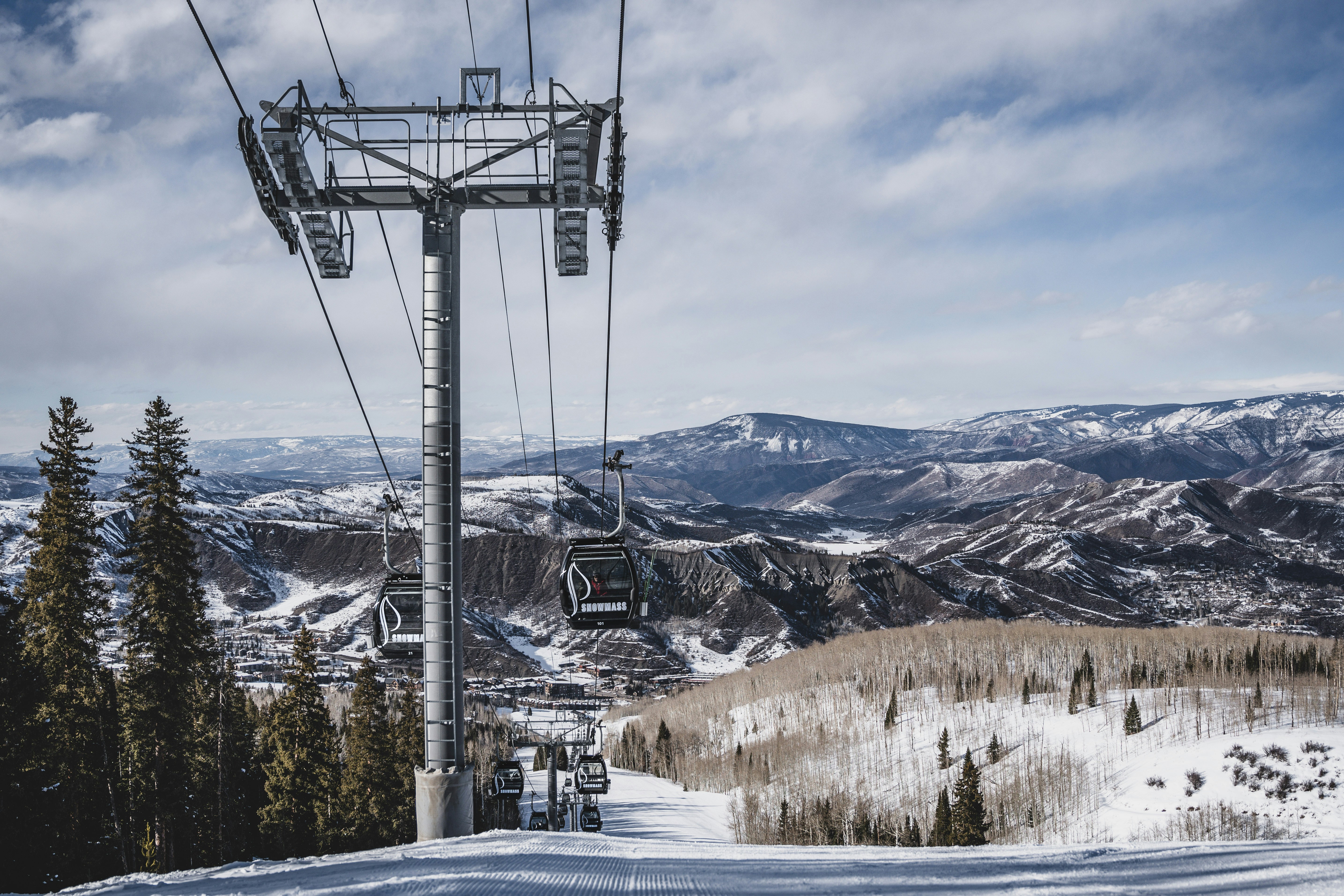
Winter is the season Aspen built its name on, and it holds up. Four separate mountains sit within a short drive of one another, so a week here can hold very different skiing without ever changing towns.
Ski Aspen’s Four Mountains
Aspen Mountain, known to locals as Ajax, drops straight into downtown from its 11,212-foot summit, and its terrain favors strong intermediates and experts. It is one of four hills under the Aspen Snowmass banner, all on a single lift ticket. Buttermilk is the beginners’ mountain. Aspen Highlands holds the steep lines the locals chase, including the double black terrain of Highland Bowl, reached by a hike to 12,392 feet. Snowmass has the acreage for a family that skis at different levels, more than 3,300 acres and a 4,400-foot vertical rise. If you are weighing Aspen against another Colorado resort for a ski week, our guide to Aspen vs Vailwalks through the trade-offs. The 2026/27 season runs from November 26 to April 18.
Off the Slopes
Aspen is set up for the days you are not skiing. The gondola runs all winter for anyone who wants the summit without the descent. Downtown keeps its galleries going through the season, and the Aspen Art Museum is free to walk into, Tuesday through Sunday. The Wheeler Opera House runs films and performances most nights. Along the valley floor there are groomed cross-country tracks, and up the creek roads there are sleigh-ride dinners for the evening if you would rather trade skis for a blanket and a fire.
Things to Do in Aspen in Fall
Things to Do in Aspen in Fall
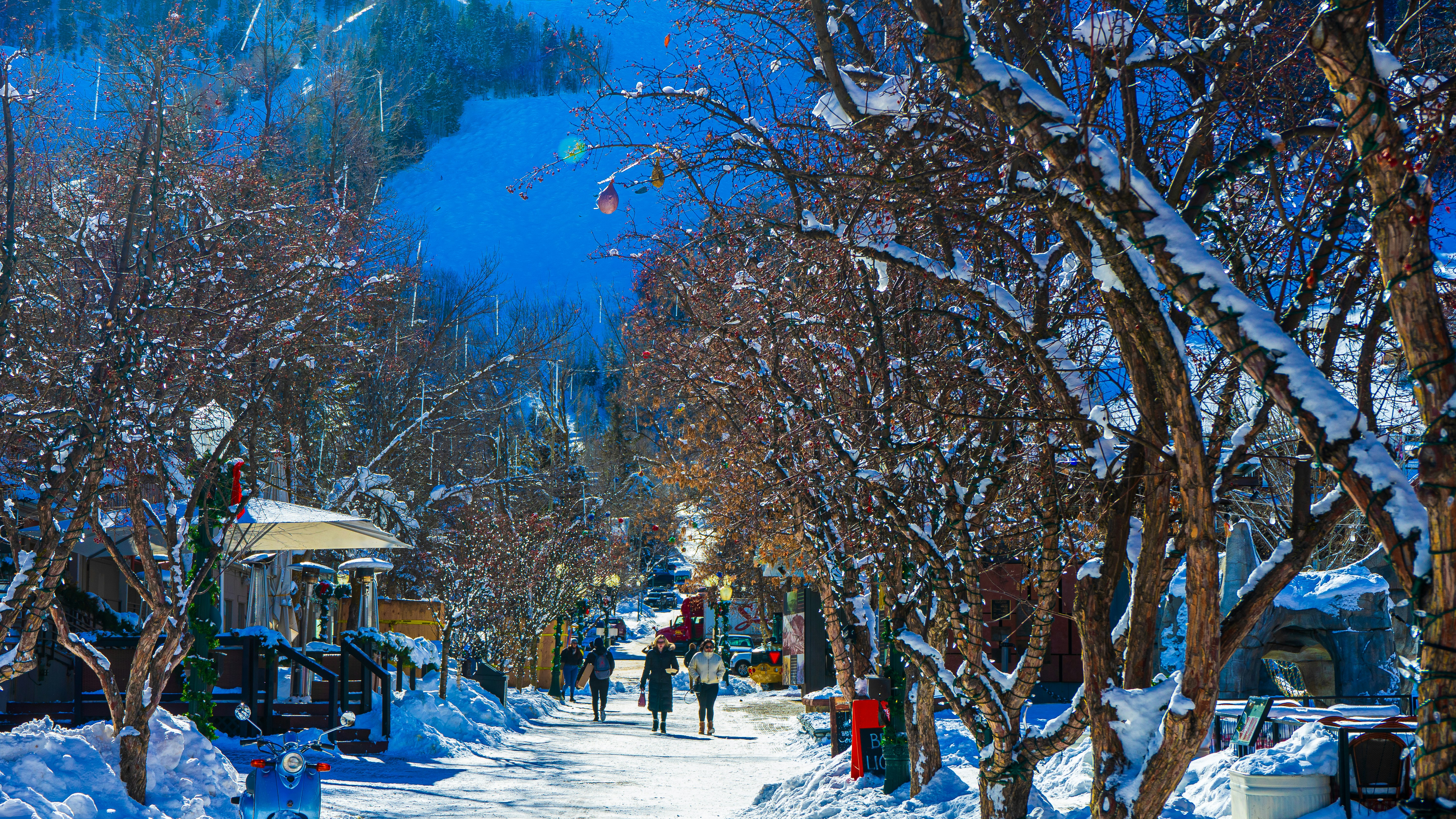
The last two weeks of September are the quiet reward of the Aspen calendar. The hillsides of aspen that give the town its name turn gold. Summer crowds have gone home, and the light comes in low and warm through the afternoons. Drive Independence Pass or Castle Creek Road while the color holds, and walk the Maroon Lake trail with a fraction of the July traffic. Aspen Filmfest lands in the same stretch, at the end of September. It is the shoulder season locals guard, and the two weeks many of them take off during the year.
Aspen Festivals and Events
Aspen Festivals and Events
Aspen runs a cultural calendar out of all proportion to its size, and for many visitors a festival is the reason for the trip in the first place.
- Aspen Music Festival and School, eight weeks of orchestral and chamber concerts under the Michael Klein Music Tent, running since 1949. Seating outside the tent on the David Karetsky Music Lawn is always free.
- The Food & Wine Classic in Aspen, three days in late June that fill the downtown mall with chefs and tastings.
- Jazz Aspen Snowmass, whose Labor Day weekend brings big touring acts to the Snowmass Town Park stage.
- Aspen Filmfest, running since 1979 and now housed in the restored Isis Theatre downtown, over six days at the end of September.
- The Aspen Ideas Festival, a week of speakers and thinkers at the Aspen Meadows campus, spanning late June into the first days of July.
Aspen History, Galleries and Main Street
Aspen History, Galleries and Main Street
Aspen was a silver camp long before it was a ski town, and the boom came and went inside twenty years. Two railroads reached the town within four months of each other, the Denver & Rio Grande in November 1887 and the Colorado Midland the following February. By 1893 roughly 13,000 people lived here and fourteen newspapers were printing. From 1891 Aspen produced more silver than any other district in the country, something like a sixth of the national supply. When Congress repealed the Sherman Silver Purchase Act in the fall of 1893, the price collapsed and the town all but emptied, holding on through decades of quiet until skiers and 10th Mountain Division veterans found the terrain after the Second World War.
Jerome B. Wheeler, an early investor, put up both the Wheeler Opera House and the Hotel Jerome at the height of this influx, the opera house opening in April 1889 and the hotel that November. The opera house came through arson in 1912 and a long closure, and it reopened after a full restoration in 1984. It still anchors its corner. Begin a walk downtown there and the brick storefronts along the street read differently afterward.
The Aspen Art Museum sits at the downtown crossroads, free to walk into and open Tuesday through Sunday, showing contemporary work in a building worth seeing for itself. The gallery scene fills the blocks around it, and an afternoon among them is an easy way to spend a day too hot or too cold for the trail.
Where to Eat After a Day Out
Where to Eat After a Day Out
Aspen has fine dining in abundance. These are the places that match the day you have just had. A bar has stood inside the Hotel Jerome since 1889, and since 1946 it has been the J-Bar. The thing to order is the Aspen Crud, a bourbon milkshake that began here as a code word during Prohibition, when Colorado went dry in 1916 and the bar carried on as a soda fountain. Soldiers on leave from Camp Hale with the 10th Mountain Division made it a local institution. For the end of a ski day, the deck at the base of the gondola catches the afternoon sun and the whole crowd coming off the hill. And after a morning on the Rio Grande Trail, the cafes along the pedestrian mall leave you a short, unhurried walk from wherever you started.
Things to Do in Aspen with Kids
Things to Do in Aspen with Kids
Aspen works well with children. The gondola is a reliable win, and most kids will happily ride it up and down more than once. The Maroon Lake walk is flat enough for small legs. The disc golf course at the top of Aspen Mountain is free to play and a novelty at that altitude. A flat stretch of the Rio Grande Trail makes an easy family ride. And on a warm afternoon downtown, the fountains on the pedestrian mall are where local kids cool off while the adults sit close by.
Getting Around Aspen Without a Car
Getting Around Aspen Without a Car
You do not need a car for most of an Aspen trip, and parking downtown is tight enough that you may be glad to leave one behind. RFTA runs free shuttles around town that connect the neighborhoods with the trailheads and the gondola base. For the Maroon Bells, take the free bus out to Aspen Highlands and pick up the shuttle there, since the road closes to inbound private cars through the middle of the day in season
Where you will want a vehicle is for the drives, chiefly Independence Pass when it is open and the mining road up Castle Creek to Ashcroft. For everything in and around town, the bus and your own two feet cover it.
What Is Open When
What Is Open When
Aspen’s seasons are sharper than the weather alone would tell you, so it pays to plan around the calendar rather than the forecast. The 2026/27 ski season at Aspen Snowmass runs from November 26 to April 18. The Silver Queen Gondola keeps a sightseeing season from late May to early October, running daily from the third week of June through the first week of September and on weekends at either end.
The Maroon Bells shuttle runs from late May to the middle of October. Independence Pass opens around the third week of May and closes with the first heavy snow in recent years in mid-November. The Aspen Music Festival fills eight weeks from the start of July, while the galleries and the art museum stay open year round.
All of this is easier with someone local behind it: the trailhead you had not heard of, or the dinner reservation the week it seems impossible. When you are ready to settle on where to stay, browse our Aspen luxury vacation rentals and let our team look after the rest.
Things to Do in Aspen: FAQ
Four or five days is the comfortable length. That leaves a day to settle in and adjust to the altitude, two or three days out among the big draws like the gondola and the Maroon Bells, and an evening or two for a concert under the tent or a night at the opera house.
A great deal, and summer is when it shows. You can ride the Silver Queen Gondola for the view, walk the Maroon Lake trail, or bike the Rio Grande Trail. The Aspen Music Festival runs for eight weeks under the Michael Klein Music Tent, and the galleries and art museum downtown fill any day too hot or too wet for the trail.
Yes, and it is the season most first-time visitors underrate. The Maroon Bells and the high trails open up, the Music Festival runs all summer, and the crowds are lighter than the winter holidays. You trade snow for wildflowers and long evenings, which is a fair trade.
More than the town’s reputation would suggest. The Aspen Art Museum is free, Tuesday through Sunday. Seating on the lawn outside the Music Tent is always free. The RFTA shuttles around town cost nothing. The disc golf course at the top of Aspen Mountain is free to play, though you need a lift ticket or a pass to get up to it.
The Maroon Lake Scenic Trail is easy, about 1.3 miles one way along the lakeshore and meadow with very little climbing, fine for most ages and fitness levels. It is an out and back rather than a loop, so you return the way you came. If you want more of a day, the Crater Lake trail carries on for another 1.75 miles and turns rockier as it goes.
Not for downtown or the Maroon Bells, both of which the shuttles reach. You will want a car if you plan to drive Independence Pass in season or to head farther down the valley.
From late spring into the fall, weather permitting. The road usually opens around the third week of May, once crews have cleared the winter snow, and closes again with the first heavy storms in recent years in mid-November. It stays shut all winter.
Plenty. The gondola is the easy favorite, the Maroon Lake walk is short enough for small legs, and a flat piece of the Rio Grande Trail makes a gentle family ride. Downtown, the fountains on the pedestrian mall are a dependable way to spend a warm afternoon.