Welcome
Sign in to access your Invited Home account
By signing in you agree to our Terms & Conditions and Privacy Policy.
Things to Do in Breckenridge
You can leave Main Street on foot, ride a gondola for nothing, and be standing at 12,840 feet before lunch. That is the part of Breckenridge the photographs don’t quite capture. Breckenridge is a Victorian mining town at the foot of a 12,840 foot mountain, and the two sit close enough together that you can spend the morning a thousand feet underground in a working gold mine and the afternoon above the treeline on the highest chairlift in North America.
Our local Breckenridge team breaks down the best things to do, season by season to make the most of your mountain vacation.
The Best of the Best
The Best of the Best
- Ride the BreckConnect Gondola from town up to Peak 8, free, about thirteen minutes each way.
- Climb Quandary Peak, at 14,265 feet the only fourteener in Summit County, and reserve parking or a shuttle seat first.
- Walk a thousand feet into the Country Boy Mine, worked since 1887, and pan for gold you get to keep.
- Ski or ride 2,908 acres across five peaks, with roughly 40 percent of the terrain above the treeline.
- Take the Imperial Express SuperChair to 12,840 feet, the highest chairlift in North America.
- Hike McCullough Gulch to the waterfall, on the same summer reservation system as Quandary.
- Drive Boreas Pass Road, a narrow-gauge railroad grade that crosses the Continental Divide at 11,488 feet.
- Play 27 holes at 9,324 feet on the only Jack Nicklaus municipal course in the world.
- Tour the Breckenridge Distillery at 9,600 feet, and take the tasting that comes free with it.
- Stand in front of a 25-ton block of hand-carved snow at the International Snow Sculpture Championships in January.
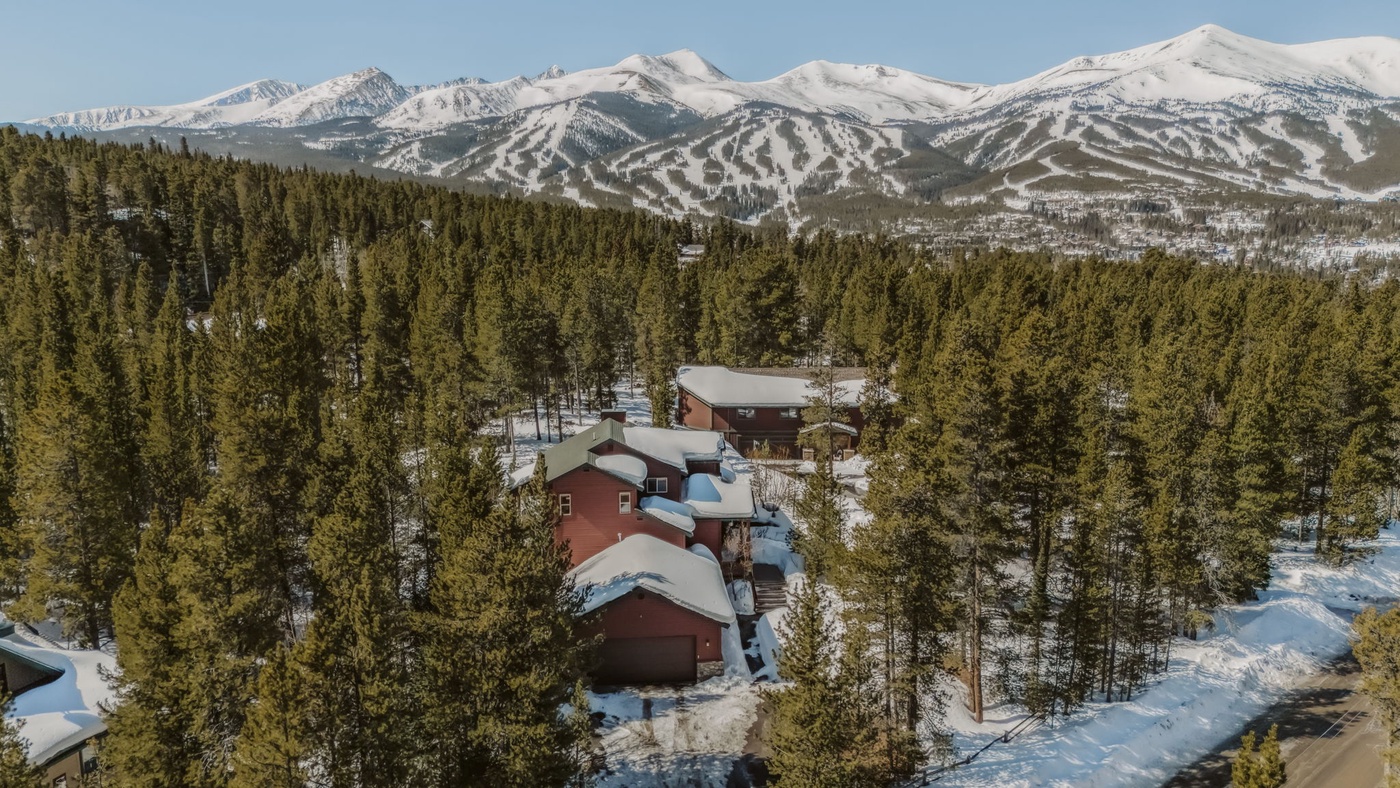
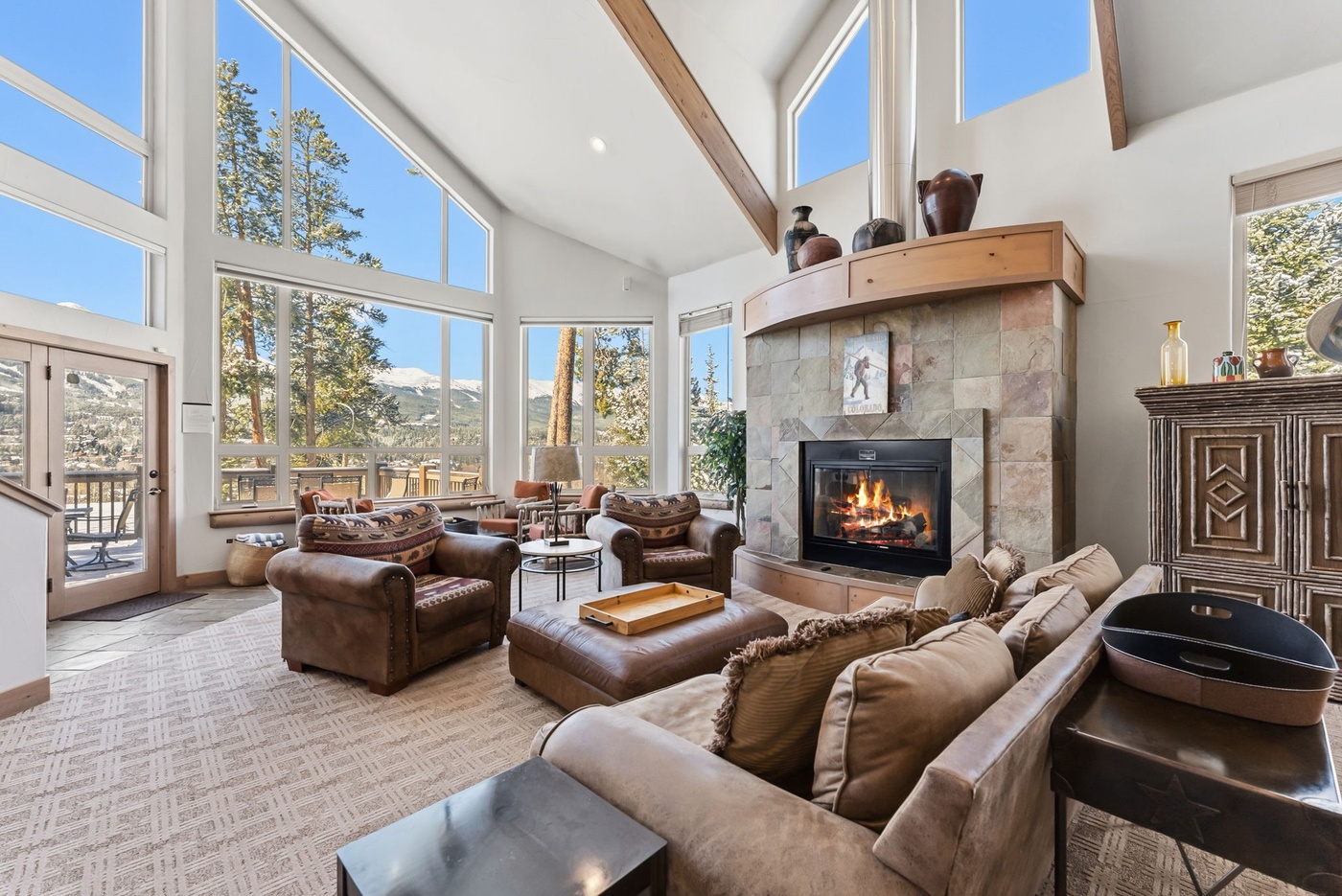
- Stay at a Breckenridge luxury vacation rentals, a few minutes’ walk from the gondola that starts all of it.
Ride the Free Gondola
Ride the Free Gondola
Most visitors treat the gondola as the queue before the queue. Treat it as the first thing you do. Board at the transfer center on Watson Avenue, a few minutes off Main Street, and the cabin climbs out over Cucumber Gulch with the Tenmile Range filling the windows and the town shrinking underneath you. Go once on a clear morning and once at the end of the day and you have had two different trips.
The BreckConnect Gondola is free for everyone, with no ticket and no pass. It runs roughly 7,600 feet of line and about 400 feet of vertical rise in around thirteen minutes, in cabins that seat eight, and dogs ride too. There are three stations: Shock Hill, then Peak 7, then Peak 8, which is where most people are going. If lunch on Peak 7 is the plan, get off at the middle station rather than riding through.
One thing to note — the resort and the Town of Breckenridge shut the gondola down every spring, not for maintenance but for the Cucumber Gulch Wildlife Preserve directly beneath the line, so that the animals migrating through the gulch can do it without a cable car overhead. It reopens for summer around the middle of June and runs into early autumn, then closes again until the ski season starts. If you are here in late May, plan around it.
Things to Do in Breckenridge in Summer
Things to Do in Breckenridge in Summer
Summer is the season first-time visitors underestimate, and it is where the list of things to do in Breckenridge runs longest. The snow pulls back to the high bowls by June, the trailheads open, the wildflowers come through July, and the town trades powder for a calendar of festivals. If you are not here to ski, this is the season, and Breckenridge is well set up for it.
Hiking
The trailheads start within a few minutes of town, which is the rare luxury here. McCullough Gulch climbs to a waterfall and an alpine lake under Quandary Peak, and it is the one everybody wants. Mohawk Lakes strings a chain of alpine lakes and mine ruins up a drainage south of town and earns the whole day it takes. The Baker’s Tank Trail leaves Boreas Pass Road about 3.5 miles out of Breckenridge and follows an old railroad grade, which means it climbs at roughly 3 percent and your lungs will thank you for it on day one.
Go easy at the start. Town sits at 9,600 feet and the trails only go up from there, which is worth planning for: our guide to the Breckenridge elevation covers what the altitude does and how to get ahead of it. For trail-by-trail detail on all of the above, see our guide to Breckenridge hikes. And before you plan a day around McCullough Gulch, read the next section: the access rules are not optional.
Climbing Quandary Peak
Quandary Peak, 14,265 feet, is the only fourteener in Summit County and one of the most climbed mountains in Colorado. The east ridge is a long walk rather than a scramble, which is why so many people underestimate it — that does not make it easy. Six hours round trip is the average, and the last stretch is above 13,000 feet where the weather can change in a moment. Start at first light and head down by noon in July and August to avoid early afternoon thunderstorms.
Parking is the detail to plan around. Summit County has run a parking reservation and shuttle system at the Quandary Peak Trailhead since 2021. From roughly mid-June to mid-September, you need a reservation or a shuttle ticket to park at either Quandary or McCullough Gulch — there is no parking on McCullough Gulch Road, Blue Lakes Road or Highway 9 at any time of year, and illegal parking draws a $100 ticket. The shuttle leaves from the South Gondola lot in town, and a second free shuttle runs from the Quandary trailhead up to McCullough Gulch. Outside that window, parking is free and first come, first served. The county publishes the exact dates each spring, so check them before you commit to a morning.
Mountain Biking
The gondola carries bikes up for a fee, which puts the Peak 8 trail network within reach without the climb. Down at valley level, the Baker's Tank and Aspen Alley loop off Boreas Pass Road is the classic: a gradual railroad-grade climb, then a descent through an aspen grove. For anyone on rented hardtails, the county recreation path is the better call — paved, flat, and running from Breckenridge to Frisco and beyond.
On the Water
The Blue River runs straight through the middle of town, and it's close enough that you'll see people fly fishing within sight of the shops on Main Street. Whitewater is a drive rather than a walk, and the season is short, roughly late May into July while the snowmelt lasts. For flat water, Dillon Reservoir is about twenty minutes north and takes paddleboards, kayaks and sailboats, with the Gore and Tenmile ranges standing over it.
Golf at 9,324 Feet
The Breckenridge Golf Club is the only 27-hole Jack Nicklaus course in the world owned by a municipality. The clubhouse sits at 9,324 feet and the ball goes noticeably further in air that thin, which is the most flattering thing anyone will do for your game all year. Three nines: the Bear and the Beaver opened in 1985, and the Elk was added in 2001 with the most elevation change of the three. It runs through lodgepole, wetland and beaver ponds under the Tenmile Range, and it typically closes in early October. Book ahead in July.
Scenic Drives
Boreas Pass Road leaves the south end of town and climbs to the Continental Divide at 11,488 feet on the bed of the narrow-gauge railroad that ran between Como and Breckenridge from 1872 to 1938, once the highest narrow-gauge line in the country. Because it is a railroad grade, it climbs at about 3 percent, which means a sedan can do it and so can a bicycle. It is open to vehicles roughly May through October and it is the best aspen drive in Summit County. Baker’s Tank, the red water tank the steam engines drank from, is 3.5 miles up.
Twenty minutes the other way, Sapphire Point Overlook sits at 9,500 feet on Swan Mountain Road with Dillon Reservoir laid out below and the Gore and Tenmile ranges behind it. It is a short walk from the car and worth the detour for ten minutes at the end of a day.
Things to Do in Breckenridge in Winter
Things to Do in Breckenridge in Winter
Skiing and Snowboarding
Breckenridge Ski Resort spreads 2,908 acres and 187 trails across five peaks, numbered 6 through 10, and roughly 40 percent of that terrain sits above the treeline, a higher proportion than almost anywhere in Colorado. The Imperial Express SuperChair tops out at 12,840 feet and is the highest chairlift in North America. It puts you within about a hundred vertical feet of the Peak 8 summit and opens 400 acres of bowls and chutes that used to cost a forty-five minute hike.
Imperial only spins once the snowpack builds. In a strong year it has opened on Thanksgiving; in a lean one it has waited until late February. If it is on your list, ask before you book the flights. Breckenridge’s ski season typically runs mid-November to late-April or early May and averages 355 inches of snow a year.
Off the Slopes
Breckenridge is great when not everyone in your group downhill skis. The Breckenridge Nordic Center, five minutes from downtown on Ski Hill Road, has been family run for more than fifty years and grooms trails straight through the Cucumber Gulch preserve, with snowcat tours and a hut with a wood-burning fireplace at the end of them. Gold Run Nordic Center, three miles north and run by the town, has nearly 20 miles of groomed trail, snowshoe terrain, fat biking and sleigh rides. Both sell day passes and rent gear, and children under thirteen ski free at Gold Run.
The Country Boy Mine runs a monster truck up its hill in winter, because horses cannot make the climb, and the trip ends with a fire and s’mores. Tubing runs on the mountain. And the gondola runs all season, so nobody gets stranded in town.
Things to Do in Breckenridge in Fall
Things to Do in Breckenridge in Fall
Late September into the first week of October is the quiet stretch of the calendar and the best value in it. The aspens turn gold along Boreas Pass and up the Gold Run valley, the trailhead reservations lapse in mid-September and the parking lots become free, the crowds are gone, and the light comes in low across the Tenmile Range. Oktoberfest lands in September and the film festival not long after. If you have flexibility, this is a great time to visit.
Festivals and Events
Festivals and Events
Breckenridge runs a festival calendar out of proportion to a town of a few thousand people, and for a lot of visitors the festival is the trip. The Riverwalk Center, a few steps off Main Street, is the main ground for most of them.
- The International Snow Sculpture Championships, in January. Teams from around the world hand-carve 25-ton blocks of snow over about five days, using hand tools only, with no power tools and no internal supports. The snow is made up on the mountain, trucked into town and stomped into blocks. Come during Sculpting Week to watch the work, and after dark during Viewing Week to see it lit.
- Ullr Fest, in December. The town’s tribute to the Norse god of snow, running since 1963, with a Main Street parade, a bonfire and an annual run at the longest shotski. It grew out of an older Breckenridge festival, which is a story in itself, below.
- Kingdom Days, in June, which is the descendant of the same story.
- Breckenridge Oktoberfest, in September, on Main Street.
- The Breck Film Festival, in September, run by Breck Film out of the Eclipse Theater.
- Breck Create runs the Riverwalk Center for the town, along with the Arts District, and its calendar carries most of the music, theatre and workshops in between.
For what is on in the coldest month, read our guide to February events in Breckenridge.
History, the Gold Mines and Main Street
History, the Gold Mines and Main Street
Breckenridge has one of the largest National Register historic districts in Colorado and a past considerably stranger than the Victorian storefronts let on.
Start with the name. The town went up in November 1859, and its promoters spelled it Breckinridge, with an i, after John C. Breckinridge, then vice president of the United States, in the hope of flattering Washington into granting a post office. It worked, and the post office that followed is held to have been the first between the Continental Divide and Salt Lake City. Then Breckinridge took a commission in the Confederate Army in late 1861, and the Union town on the Blue River took his i out and put an e in its place. It has been Breckenridge ever since.
Then there is the Kingdom. In the 1930s, with the gold gone and the Depression on, the Women’s Club of Breckenridge produced an 1880 map that did not show the town and concluded that Breckenridge had never actually been annexed into the United States. This was not true, and the state historian said so at the time, citing a treaty from 1819. He was ignored. In 1936 the club invited the Governor of Colorado up to raise the flag over the courthouse and formally welcome Breckenridge into the union, and he came, with a brass band and a naval gun, and the whole thing made national news. It survives as Colorado’s Kingdom and as Kingdom Days every June, and it is arguably the most successful piece of tourism marketing in the state’s history. Breckenridge History, the non-profit that runs the museums and the walking tours, tells it straight, including the part where the whole thing was made up.
The best of those museums is the Barney Ford Museum, in the house Ford built in 1882. Ford was born into slavery in 1822 and enslaved for the first twenty-six years of his life, escaped in 1848, came to Colorado, was claim-jumped, burned out and financially ruined more than once, and became one of the wealthiest businessmen in the territory. He campaigned against Colorado’s admission as a state while it denied Black men the vote. The tour is thirty minutes, it is free with a suggested donation, and Main Street reads differently afterwards.
Two miles east of downtown, the Country Boy Mine has been open since 1887 and is the only underground gold mine tour in Breckenridge. You walk a thousand feet into the mountain, then pan for gold in Eureka Creek and keep whatever you find. There are burros in summer, a fifty-five foot ore slide, and a general store. It is cold down there whatever the date, so wear closed shoes and take a coat, even in July.
And a mile out on Airport Road, the Breckenridge Distillery has been making bourbon at 9,600 feet since 2008 and bills itself as the highest distillery in the world. The thirty-minute tour is free, first come first served, and ends in a tasting. There is a restaurant attached if the tasting works out.
Where to Eat After a Day Outet
Where to Eat After a Day Outet
Not a directory, and not the fine dining list. These are the places that go with the day you have just had.
- Clint’s Bakery & Coffeehouse, on South Main, open at seven, for the coffee before a trailhead and the sandwich you put in your pack. The cinnamon rolls sell out early, which is either a warning or an incentive.
- Broken Compass Brewing, for the beer at the end. The original taproom is out on the industrial edge of town off Airport Road; the second sits across from the base of Peak 9, which is the one you can walk to in ski boots. Dogs welcome at both.
- Crepes A La Cart, a walk-up window on Main Street since 2000, for the thing you eat standing up in the cold with your gloves under your arm.
- Hearthstone Restaurant, in the 1883 Kaiser House on Ridge Street, wild game and the only multi-level patio in town, for the evening you have decided to make an occasion.
Things to Do in Breckenridge with Kids
Things to Do in Breckenridge with Kids
The mine is the winner: hard hats, a thousand feet of tunnel, a fifty-five foot slide, burros to feed and gold they get to keep. It holds attention in a way a museum case does not. The gondola is free entertainment and they will ride it four times a day. In summer, Peak 8 features a mountain coaster, an alpine slide and a set of zip lines strung through the national forest, all reached without a car. In winter there is tubing on the mountain and a ski school that will return them better skiers than you. And the Blue River runs through the middle of town at exactly the right depth for throwing rocks into.
For the evenings you would rather have to yourselves, sitting services operate in town and our concierge can arrange one.
Getting to the Trailheads and the Venues
Getting to the Trailheads and the Venues
A car is less useful here than you would expect, and parking can be difficult. Breck Free Ride is the town’s free bus and covers the town, Ski Hill Road and the gondola. The Summit Stage is the free county bus and connects Breckenridge with Frisco, Silverthorne, Dillon, Keystone and Copper. Between those two and the gondola, most guests use a vehicle twice: in and out.
The gondola lots on Watson Avenue are the practical place to leave a car in town, and they are paid. Most downtown lots are paid and they fill early on event weekends. The free lot on McCain Road runs from six in the morning to eleven at night, with no overnight parking, and it sits on two of the bus routes.
Where you do want a vehicle: Boreas Pass, Sapphire Point, Dillon Reservoir, and the drive to the Quandary trailhead if you hold a reservation. A standard car handles all of them in summer. For everything in town, leave it where it is.
What Is Open When
What Is Open When
Activities operate seasonally, so plan around the calendar rather than the forecast. Ski season runs roughly mid-November to early-May, and the Imperial Express only spins once the snowpack allows. The gondola runs through both main seasons and shuts for the Cucumber Gulch closure in between, reopening for summer around mid-June. Summer operations on Peak 8 start around the second weekend of June. Boreas Pass Road is open to vehicles roughly May through October. The Quandary and McCullough Gulch reservation window runs mid-June to mid-September, and on either side of it the parking is free. The golf course closes in early October. Festival dates anchor January, June and September.
All of it goes better from a home with someone local behind it: the Quandary reservation nobody remembered to make, the table on a festival Saturday, the trail that is actually clear this week.